
Grant Year
2026, 2025Project Leader/s
Project Description
Bridges is the word that best captures Outer Coast’s approach to educating future environmental leaders. Outer Coast builds bridges between Indigenous and European ways of knowing, between classroom learning and hands-on practice, and between students and the communities they serve. As a two-year liberal arts institution, it prepares high school graduates for success as they continue their education, while grounding learning in mentorship, place, and lived experience.
In a world shaped by ecological fragmentation, climate change, and rapidly evolving technologies, divides are widening and challenges are becoming more complex. Outer Coast’s new Place-Based Ways of Knowing Environmental Research Program responds by offering students the intellectual, cultural, and practical bridges they need to navigate these layered and shifting realities.
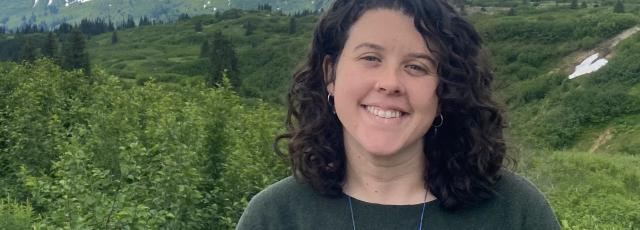
“An Outer Coast education does more than teach critical thinking or grant degrees. It provides students with purpose, tools, and mindsets to tackle challenging problems,” says Dr. Caroline Daws, project leader for the program. Funded by the Thoreau Foundation, the program provides paid internships that immerse students in research and adaptive problem-solving while connecting them with community partners, Elders, and tradition-bearers.
“Already, our students are in the field and the lab learning core research skills, collecting soil cores, processing archaeological artifacts, analyzing data, and interpreting models,” Daws says. “Rural places like Sitka, and many of the communities our students come from, are especially vulnerable to environmental change. At the same time, they are places of deep resilience and hope, where people work collaboratively across political, cultural, and geographic divides to care for lands and waters.”
At Outer Coast, leadership is local. “We don’t have career politicians here,” Daws explains. “The people serving on assemblies, natural resource agencies, and tribal councils are your neighbors. They’re fishermen, teachers, and small business owners.” This proximity to decision-making gives students a grounded understanding of how environmental stewardship actually happens.
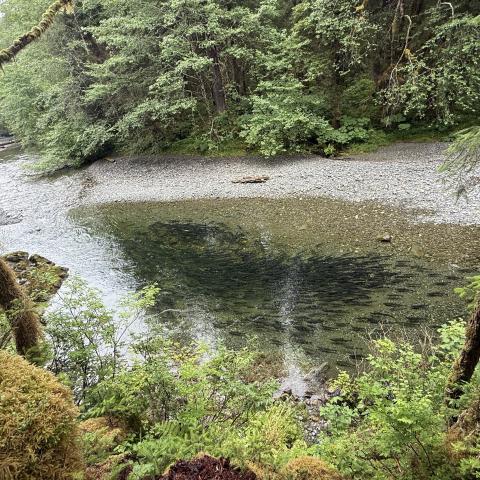
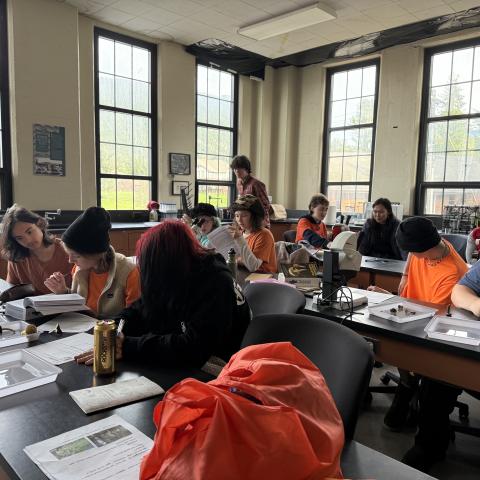
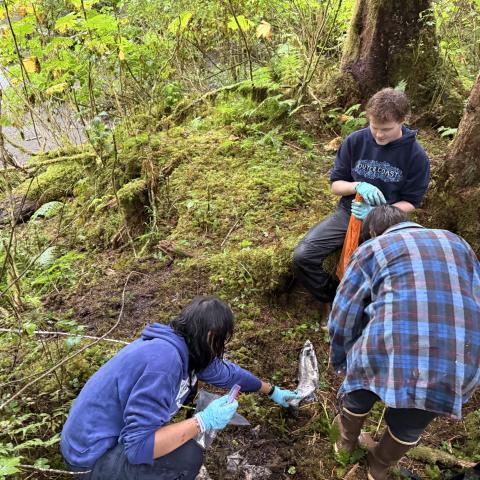
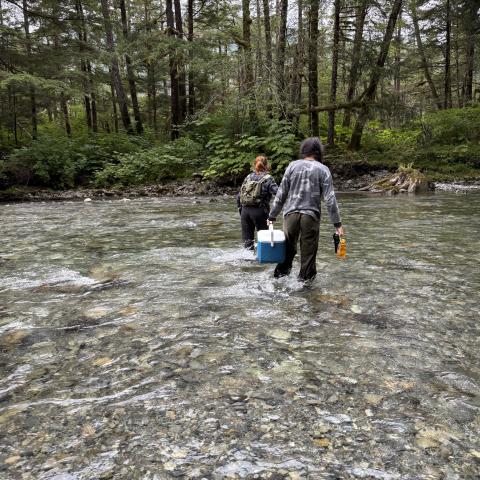
Daws’ own research examines how fungi mediate forest responses to global change, with a strong emphasis on place-based science. By participating in her work, students gain technical expertise both in the field and in the lab. Through the Thoreau Foundation grant, classroom and laboratory space at the Sitka Sound Science Center further expands these opportunities.
Beyond fungal ecology, students engage in a wide range of faculty-led scholarship. They have contributed to a local archaeological dig, studied Native arts, created gifts for traditional ceremonies, written for The Sitka Daily Sentinel, and served as mentors to students at Pacific High School in a forest mycology course. These experiences reinforce the program’s commitment to learning that is interdisciplinary, community-connected, and meaningful.
A defining feature of the program is its integration of technical science with Indigenous knowledge, local stakeholder priorities, and land and resource management expertise. Outer Coast’s Elders-in-Residence—a community of more than a dozen Tlingit tradition-bearers, scholars, and language teachers—serve as a second faculty for students. Learning Tlingit, engaging in subsistence lifeways, and participating in community decision-making are central to how students develop the skills needed for environmental leadership.
“We are training students not only to have scientific and technical competence, but also the relationship-building and communication skills required to navigate conflict and broker compromise,” Daws says. “As our students leave Outer Coast and fan out across the country and beyond, they’ll carry these skills into other communities facing different challenges.”
Daws notes that she has long been thinking about how best to teach environmental and ecological topics, fields that demand interdisciplinary approaches by nature. The Place-Based Ways of Knowing Environmental Research Program, she says, will allow Outer Coast to deepen community partnerships and build long-term momentum.
“Students are excited for the chance to do hands-on research,” Daws adds. “The impact of this opportunity will be felt not only here in Sitka, but in the many communities our students will serve after their two years at Outer Coast.”
More Information
Dr. Caroline Daws' faculty page
More about Outer Coast